I see this pattern all the time. Something hurts. You finally do something about it. You start feeling better. And because you’re feeling better, you go back to life and put taking care of your body on the back burner.
Until it hurts again.
Sometimes badly enough that you have no choice but to pay attention.
What if we stopped waiting for that part?
When you’re living with chronic or recurring pain, feeling better doesn’t necessarily mean it’s time to stop caring for the area that has been giving you trouble.
It may be the perfect time to build on the progress you’ve already made.
That’s the thinking behind my 6-Week Chronic Pain Management program.
Instead of waiting until your symptoms become difficult to manage again, we work together once a week for six weeks.
This gives me the opportunity to see how your body responds, what improves, what keeps returning, and what we may need to approach differently. And you’re not relying entirely on what happens during your massage.
You’ll also have your self-care tools and exclusive Neurotraining and stretching routine to use between sessions, so you’re actively participating in your care at home.
The goal is to get ahead of your pain and manage it more effectively, rather than continually reacting to it.
If chronic pain has been calling the shots for long enough, consider being proactive about your health and giving your body six weeks of consistent attention.
Book your 6-Week Chronic Pain Management program by October 3 and receive $60 off, plus your complimentary self-care bag.
HSA/FSA funds may be used if massage therapy is an eligible expense under your plan.
Don’t wait until your body is screaming for your attention. Listen while it’s still talking.
See you on my table,
Aubrey
https://mobilityinmassage.com/wp-content/uploads/2021/07/Audrey-Garcia-Logo-300x284.png00Aubrey E. Garciahttps://mobilityinmassage.com/wp-content/uploads/2021/07/Audrey-Garcia-Logo-300x284.pngAubrey E. Garcia2026-09-23 00:12:242026-09-23 00:12:26Stop Waiting Until It Hurts Again
Have you ever had a massage, felt so much better afterward, and thought, “Finally!”
Then a few days or weeks later, the pain returned?
This can easily become a cycle:
You wait until the pain becomes difficult to ignore.
You get treatment.
You feel better.
You return to your regular routine.
Then you wait until the pain becomes unbearable again before booking another appointment.
And every time you come back, it can feel as though we are starting all over again.
This does not necessarily mean the treatment did not work. It may mean that one session provided relief, but your body did not receive enough consistent support to maintain that progress.
Recurring pain can be influenced by many things, including how you move, the physical demands of your work, muscle tension, stress, sleep, previous injuries, and the amount of recovery time your body receives.
That is why my 6-Week Chronic Pain Management Program is built around consistency.
Instead of waiting until your body is screaming for help again, we work together every week and pay attention to how your body responds.
Did the pain decrease?
How long did the relief last?
Did a particular movement become easier?
Did the pain return to the same place, or did something else begin to stand out?
What still needs attention?
Those answers help me individualize each session rather than automatically repeating the same treatment every week.
The goal is to interrupt the cycle of waiting, hurting, and temporarily recovering by giving your body consistent care while we learn more about what helps you manage your symptoms.
The program includes six weekly massage sessions, a personalized stretching and Neurotraining routine, and a bag of self-care tools you can use between appointments.
If you have questions or would like to know whether this program may be appropriate for you, reply to this email or contact me directly.
Please feel free to forward this email to someone you know who may benefit from this focused program.
With Gratitude,
Aubrey
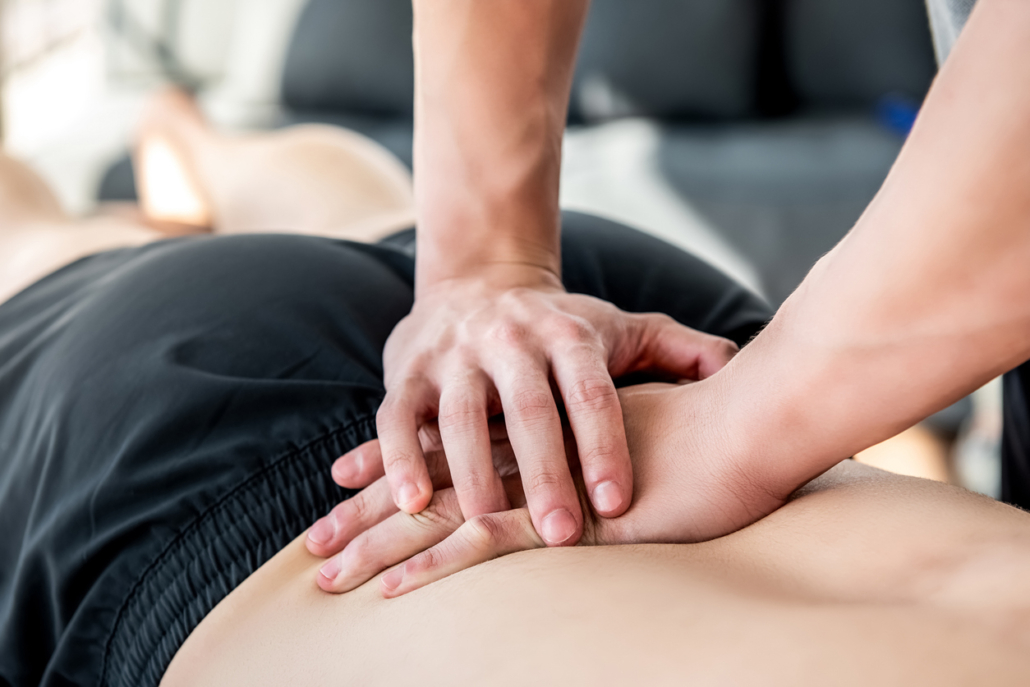
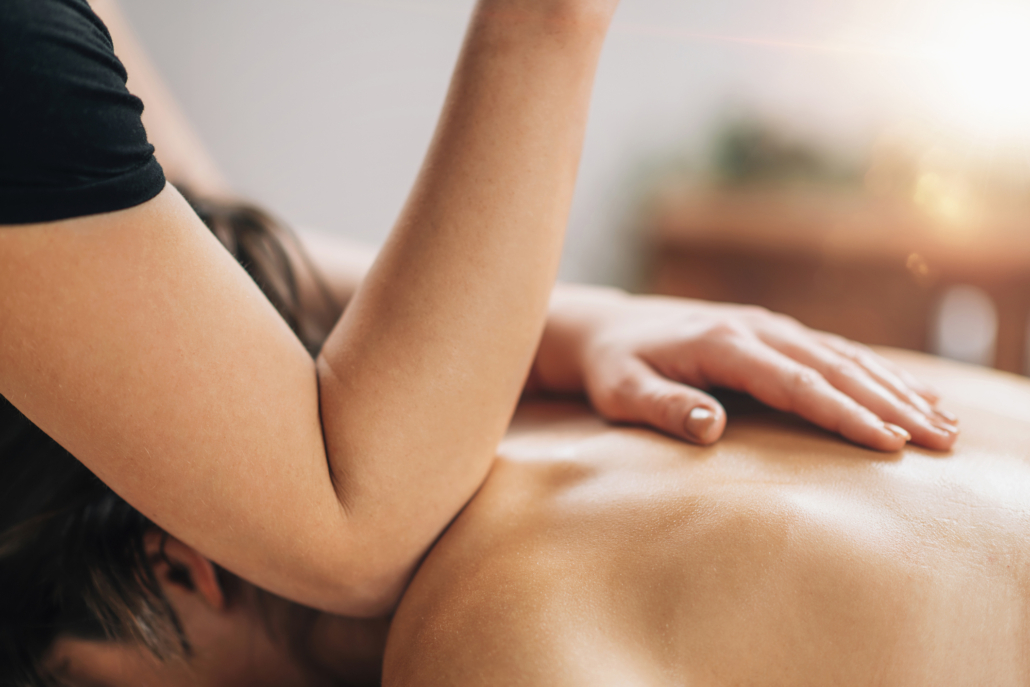
Therapist giving lower back sports massage to athlete male patient in clinic
https://mobilityinmassage.com/wp-content/uploads/2021/07/Audrey-Garcia-Logo-300x284.png00Aubrey E. Garciahttps://mobilityinmassage.com/wp-content/uploads/2021/07/Audrey-Garcia-Logo-300x284.pngAubrey E. Garcia2026-09-19 00:41:332026-09-19 00:41:35Why One Massage May Not Be Enough
Yesterday, I introduced my 6-Week Chronic Pain Management program.
So why six weeks?
Because when you’ve been dealing with pain for months or even years, I don’t believe the best approach is to wait until you’re hurting badly, get a massage, feel better, and then wait until you’re hurting again.
That’s the cycle I’m trying to interrupt.
Six weeks gives us consistency.
Instead of starting from scratch every time you come in, I get to see how your body responds from one week to the next.
Did your pain decrease after your last session?
How long did the relief last?
Are you moving differently?
Did something that normally aggravates your pain become easier?
What still needs attention?
Your answers help guide what we work on next.
And there is research supporting massage as one option for managing chronic low back pain. In one large study, people receiving weekly massage over a course of treatment had better pain related function and less bothersome symptoms at the end of treatment than people receiving usual care.
Usual care meant that the subjects continued whatever medical care they would normally receive for their back pain through their healthcare system.
This means that consistency gives us an opportunity to work with your body over time rather than treating each appointment like an isolated event.
Since you spend far more time living your normal life than you spend on my massage table, your body goes back to work, driving, sitting, exercising, sleeping, lifting things, and everything else that may influence your symptoms.
What you do in-between your weekly sessions matters too. To support your healing journey, you’ll also receive a self-care bag with massage balls, a rolling pin, my favorite Epsom salt, and an exclusive Neurotraining and stretching routine to use at home.
Book your 6-Week Chronic Pain Management program by October 3 and receive $60 off, plus your complimentary self-care bag.
HSA/FSA funds may be used if massage therapy is an eligible expense under your plan.
Six weeks isn’t about a quick fix. It’s about giving consistency a chance.
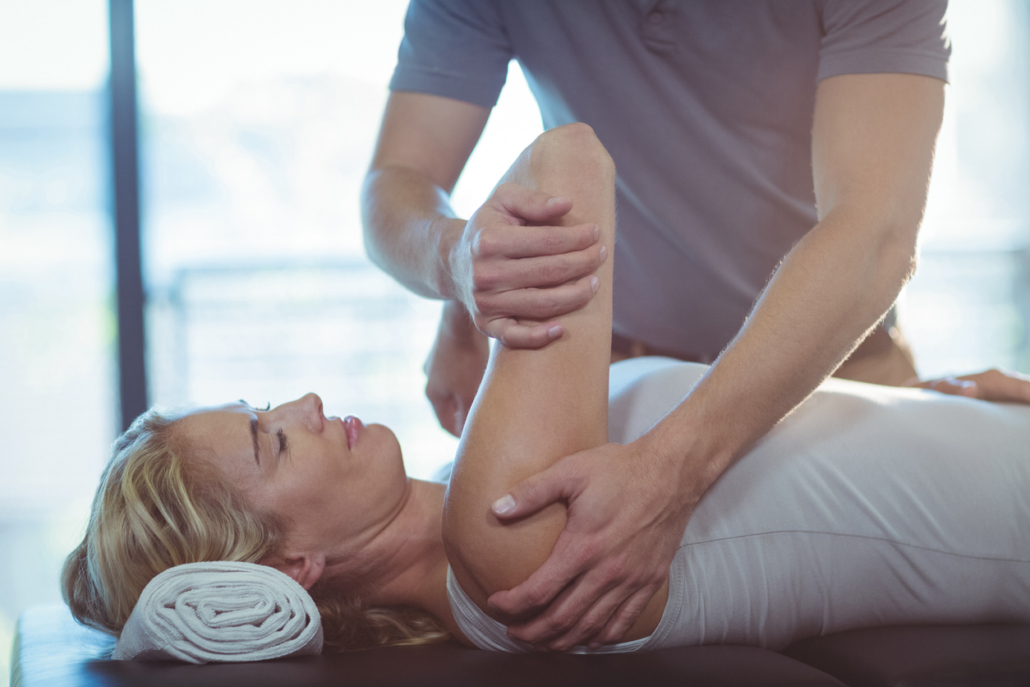
Woman receiving shoulder therapy from physiotherapist in clinic
https://mobilityinmassage.com/wp-content/uploads/2021/07/Audrey-Garcia-Logo-300x284.png00Aubrey E. Garciahttps://mobilityinmassage.com/wp-content/uploads/2021/07/Audrey-Garcia-Logo-300x284.pngAubrey E. Garcia2026-09-19 00:13:242026-09-19 00:13:26Why Six Weeks?
Last month, we talked about Upper Cross Syndrome and how everyday habits can contribute to recurring tension in the neck, shoulders, and upper back.
This month, we’re moving down the body to another common pattern: Lower Cross Syndrome.
If your lower back always feels tight, your hips feel stiff after sitting, or you keep stretching the same areas only for the tension to return, your lower back may not be the only thing that needs attention.
What Is Lower Cross Syndrome?
Lower Cross Syndrome can develop when some muscles around your hips and lower back are working harder than others.
Think of your muscles as a team. When some aren’t pulling their weight, others have to work harder to compensate.
The muscles at the front of the hips and around the lower back can become tight or overworked, while the glutes and abdominal muscles may not be contributing as much as they could.
Over time, this can affect how you sit, stand, walk, bend, and move.
Where Might You Feel It?
You may experience:
• An aching or tight lower back • Tight or stiff hips • Tension through the front of the hips or thighs • Weakness through the glutes or core • Stiffness after prolonged sitting • Discomfort after standing for long periods • The constant urge to stretch your lower back
Some people may also have a forward tilt of the pelvis and a more pronounced curve through the lower back. This doesn’t automatically mean something is wrong. Bodies are built differently, and what matters most is how you feel inside your body.
What Contributes to It?
Doing the same thing for too long.
Sitting at a computer, driving, standing all day, repeatedly bending or lifting, and performing the same movements over and over can all contribute to muscular imbalances.
Even active people can develop them when they repeatedly train or move in the same ways.
Our bodies need movement, but they also need variety of movement.
Why Does My Lower Back Keep Getting Tight?
When your lower back hurts, it makes sense to focus on your lower back.
But your hips, glutes, abdomen, pelvis, and lower back all work together. If some aren’t doing their share, your lower back may have to work harder.
That’s why repeatedly stretching or massaging the same sore spot may provide relief without addressing the bigger picture.
The place where you feel the pain isn’t always the only place that needs attention.
How Can Massage Therapy Help?
When you come in with lower back tension, I may work not only on your lower back, but also your hips, glutes, thighs, and other areas affecting how your lower body moves.
Massage therapy can help reduce muscular tension and discomfort, relax overworked muscles, and help you move more comfortably. For chronic or recurring pain, however, consistency matters.
That’s why I’ve created my 6-Week Chronic Pain Management program, giving us six consecutive weeks to work with your body and adjust your massage treatments according to how you respond.
If you’re tired of feeling better only for the pain to return, let’s try something different.
Book by October 3 and receive $60 off, plus a self-care bag containing massage balls, a rolling pin, my favorite Epsom salt, and an exclusive Neurotraining and stretching routine to support you between sessions.
HSA/FSA funds may be used if massage therapy is an eligible expense under your plan.
Six weeks. Consistent care. Let’s see what your body can do with it.
Your body does a lot for you every single day. Give it movement, give it variety, and when it starts complaining, listen.
Thank you for continuing to trust me with your care. I’ll see you on the table.
With Gratitude,
Aubrey
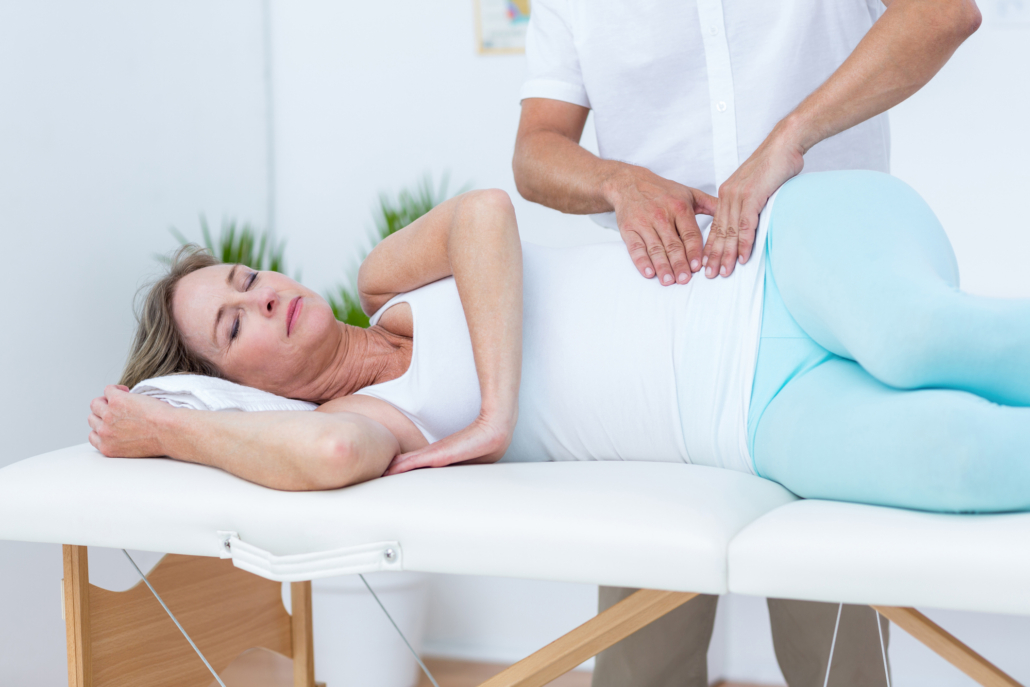
Doctor massaging his patient stomach in medical office
https://mobilityinmassage.com/wp-content/uploads/2021/07/Audrey-Garcia-Logo-300x284.png00Aubrey E. Garciahttps://mobilityinmassage.com/wp-content/uploads/2021/07/Audrey-Garcia-Logo-300x284.pngAubrey E. Garcia2026-09-15 23:23:102026-09-15 23:23:12Your Lower Back May Not Be The Problem
This month, I will be sharing a couple of newsletters because I have a lot to say, and I would like to hold your attention long enough for each message to breathe.
In my next newsletter, I will share helpful information about lower crossed syndrome. But today, I want to talk about matters of the heart.
As many of you know, Mobility in Massage® was born from my relentless pursuit of staying alive after the loss of my daughter, Isabella.
Building my practice became a way for me to anchor myself in this world. It gave me somewhere to direct my love and a reason not to surrender my life to grief and defeat.
I can now speak openly about my journey without the lump in my throat that once made the words nearly impossible to say. Some of what I share may be difficult to read, but please stay with me. The message is important.
If you are functioning while privately struggling, I see you. This is for you.
I have shared before how Reiki supported me through grief. In many ways, it also ushered in my spiritual awakening. Reiki did not erase my loss, nor did it ask me to pretend that everything was okay. It gave me a quiet place to rest inside myself when my inner world felt unbearable.
Sometimes, healing does not begin with fixing anything.
Sometimes, it begins when you are given permission to stop holding everything together.
You may be grieving someone you love. You may be moving through a separation, illness, exhaustion, uncertainty, or a life you no longer recognize. Perhaps you continue going to work, caring for others, and completing everything expected of you while quietly wondering how much longer you can keep carrying it all.
You do not have to arrive with the right words. You do not have to explain your entire story. You do not have to perform strength in my treatment room.
This month, I am offering a limited number of six-week Reiki and Massage Immersions for people who need consistent, compassionate support while moving through a difficult season.
Over six sessions, you will receive intentional time to rest, reconnect with your body, and be cared for without being asked to give anything in return. Each session will be shaped around what you need that day through massage, Reiki, or a combination of both.
Anyone who begins an immersion this month will also receive a recorded guided meditation and a personalized journal as a gift. Complimentary yours to help with the process and to use for reflection, emotional release, noticing patterns, or simply giving the thoughts inside you somewhere safe to land.
Asking for help does not make you weak. It means you do not have to carry everything alone.
If something in this message speaks to you, you are welcome to reply to this email. We can talk about whether the six-week immersion is the right form of support for you.
If you know someone who may benefit from this message or this offering, please pass it along to them.
https://mobilityinmassage.com/wp-content/uploads/2021/07/Audrey-Garcia-Logo-300x284.png00Aubrey E. Garciahttps://mobilityinmassage.com/wp-content/uploads/2021/07/Audrey-Garcia-Logo-300x284.pngAubrey E. Garcia2026-09-08 03:31:012026-09-08 03:31:04You Can Be Functioning and Still Be Struggling
Over the years, I’ve treated clients with a wide variety of musculoskeletal conditions. I share information about these conditions so that if you’re experiencing similar symptoms, you can be better informed and know what steps to take. This includes what the condition is, how massage therapy may help, and whether it falls within my scope of practice.
This month, I’m covering Upper Crossed Syndrome, a postural pattern I see more frequently due to prolonged sitting and device use.
It commonly causes:
• Forward head posture and rounded shoulders • Neck, shoulder, and upper back pain • Tightness across the chest • Aching or burning between the shoulder blades • Headaches beginning at the base of the skull • Stiffness or reduced neck and shoulder movement
Massage therapy can help relieve tension and improve mobility, but lasting improvement also requires regular movement, stretching, and strengthening.
Helpful steps include:
• Stretching the chest, neck, and shoulders • Strengthening the upper back and deep neck muscles • Taking frequent breaks from sitting • Raising screens closer to eye level • Practicing chin tucks, rows, wall slides, and resistance band exercises
If pain travels into your arm or causes tingling, numbness, or weakness, please seek medical evaluation, as these symptoms may indicate nerve involvement.
After working as a massage therapist for the past ten years, often bent over a massage table, I am very aware of how easily this posture can develop. That is one reason I decided to take up flying trapeze. Hanging from a bar and flinging myself through the air engages my upper back muscles, opens my chest, and demands strong core engagement. It’s a fun way to counterbalance the positions I hold throughout an eight hour workday.
I encourage you to find an enjoyable activity that helps counterbalance the repetitive positions and movement patterns of everyday life. You might choose swimming, rowing, yoga, Pilates, resistance training, or simply walking with intention. Whatever you choose, make it enjoyable enough to continue, because consistency is where meaningful change happens.
Sometimes, the people who most need support are the least able to leave home. Anxiety can make travel feel overwhelming, while pain, fatigue, or limited mobility can make it physically difficult.
Distant Reiki offers another way to receive care. You can remain in your own home, settle into a comfortable position, and receive your session without needing to drive or enter an unfamiliar space.
I have offered Distant Reiki to people as far away as Australia. In two separate sessions, former bodybuilders experiencing severe pain and difficulty walking reported being able to take their first steps away from bed without pain following their sessions. These were their individual experiences, and results will vary, but they remain two of the most meaningful sessions I have facilitated.
Reiki is a complementary wellness practice and is not intended to replace medical evaluation or treatment.
If anxiety, pain, or physical limitations have prevented you from exploring Reiki, distance does not have to be a barrier.
Introductory offer: Experience a complimentary 30 minute Distant Reiki session with me.
Appointments are available on August 9 and 16. If your work schedule makes weekday appointments difficult, this is a great opportunity to come in over the weekend.
I think that’s it for now. Thank you for choosing Mobility in Massage to help you move better through life. Whether you receive massage therapy or Reiki, I am truly grateful for your trust and continued support.
Please reach out if you have any questions.
With Gratitude,
Aubrey
https://mobilityinmassage.com/wp-content/uploads/2021/07/Audrey-Garcia-Logo-300x284.png00Aubrey E. Garciahttps://mobilityinmassage.com/wp-content/uploads/2021/07/Audrey-Garcia-Logo-300x284.pngAubrey E. Garcia2026-08-06 18:10:222026-08-06 18:10:23Move Better, Feel Better: August News from Mobility in Massage
July 2026 Newsletter by Aubrey E. Garcia, LMT, RMT, Reiki Master Teacher
Distributed via Clinicsense
Hello Beautiful People!
Over the years, I’ve treated clients with a wide variety of musculoskeletal conditions. I wanted to share information about some of these conditions so that if you’re experiencing similar symptoms, you can be better informed and know what steps to take. This information explains what the condition is, how massage therapy may help, and whether it falls within my scope of practice.
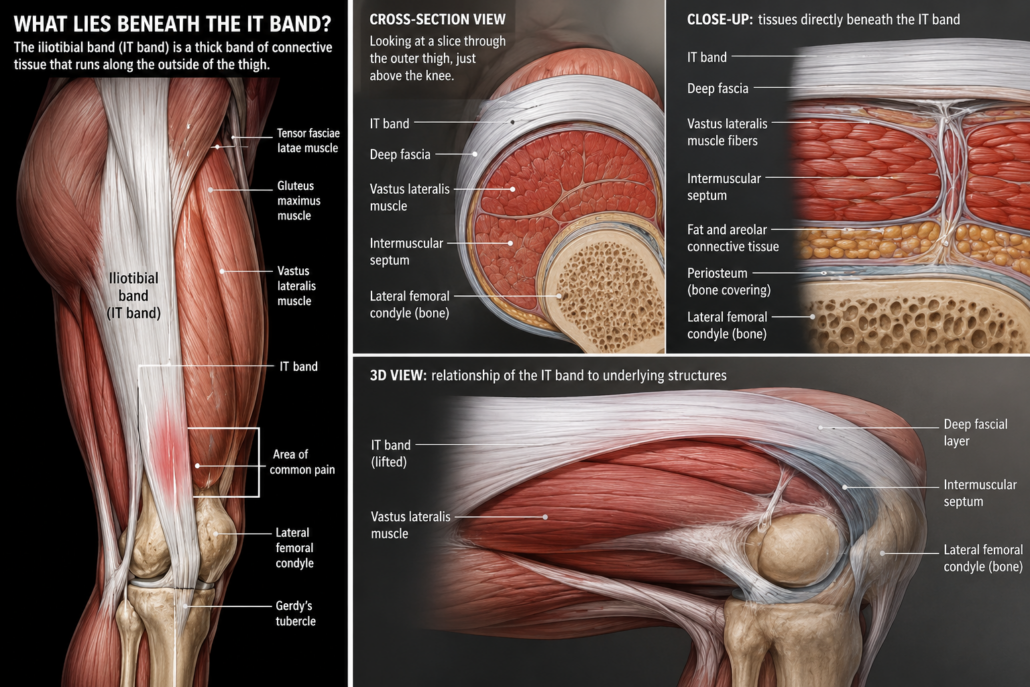
This month, I’d like to discuss one of the more common causes of pain on the outside of the knee: Iliotibial Band Syndrome (IT Band Syndrome).
The IT band is a dense band of connective tissue that runs from the hip to the outside of the knee. Repetitive bending and straightening of the knee can irritate the tissues beneath the IT band, resulting in pain on the outside of the knee. Symptoms often include a burning or aching sensation that may worsen during activities such as running, hiking, or cycling. Contributing factors may include a sudden increase in activity, running downhill, uneven terrain, inadequate recovery, muscle weakness, and worn or inappropriate footwear.
Massage therapy may help reduce muscle tension and discomfort in the surrounding muscles, which can improve comfort and support recovery as part of a broader treatment plan.
As a massage therapist, my role is to recognize when your symptoms may be consistent with IT Band Syndrome, but not to diagnose the condition. If I suspect this may be the cause of your pain, I’ll recommend that you see your physician or physical therapist for an evaluation. They can provide a diagnosis, prescribe appropriate exercises, and advise you on activity modifications.
One important point to note is that the IT band is not a muscle, so it cannot be stretched in the way many people believe. Likewise, aggressive foam rolling directly over the IT band has not been shown to lengthen it and is often uncomfortable. Instead, foam rolling the surrounding muscles, such as the glutes, quadriceps, hamstrings, and hip muscles, may help improve mobility and reduce discomfort.
If you’re experiencing knee pain and you’re unsure whether massage therapy is appropriate, feel free to reach out. I’m always happy to discuss whether massage may help or whether a referral to another healthcare professional would be the best next step.
Saturday Availability in July
I’m offering afternoon appointments on Saturday, July 18 and Saturday, July 25, with bookings available from 1:00 p.m. to 5:00 p.m.
If you prefer to sleep in, spend the morning getting things done, and enjoy a more relaxed afternoon, here’s your chance to book a later appointment.
I wanted to express my sincere gratitude to everyone who has referred their friends and family to me. Your trust and support are what keep my doors open.
I’d also like to thank everyone who has taken the time to leave a Google review. Your kind words help my business remain visible and make it easier for the right people to find me.
Thank you for your continued support. It truly means more than you know.
https://mobilityinmassage.com/wp-content/uploads/2021/07/Audrey-Garcia-Logo-300x284.png00Aubrey E. Garciahttps://mobilityinmassage.com/wp-content/uploads/2021/07/Audrey-Garcia-Logo-300x284.pngAubrey E. Garcia2026-07-06 20:47:492026-07-06 23:08:05Why Does My Knee Hurt
Over the years, I’ve treated clients with a wide variety of musculoskeletal conditions. I wanted to share information about some of these conditions so that if you are experiencing similar symptoms, you can be more informed and know what steps to take to address your concerns. This information explains what the condition is, how massage may help, and whether it falls within my scope of practice. I’ll start at the bottom of our anatomy and work our way up as I write these newsletters throughout the year. Let’s begin with the feet.
Plantar Fasciitis
What it is:
Irritation of the connective tissue on the bottom of the foot. Massage may help reduce tension and improve mobility.
Contributing Factors:
• Standing for long periods, especially on hard surfaces
• Sudden increases in walking, running, hiking, or exercise
• Tight calf muscles that limit ankle mobility
• Poorly fitting or worn-out footwear
• High arches or very flat feet (in some individuals)
• Carrying extra body weight
• Occupations that require prolonged standing
Scope of Practice:
✔ Massage is within the scope of practice to address soft tissue restrictions and discomfort.
✘ Massage therapists do not diagnose plantar fasciitis or prescribe medical treatment. Please consult your physician.
Achilles Tendinopathy (often called Achilles Tendinitis)
What it is:
Overload or irritation of the tendon connecting the calf muscles to the heel. Massage may help relieve muscle tension and support recovery.
Common Contributors:
• Sudden increases in running, jumping, or sports activity
• Tight calf muscles
• Inadequate recovery between training sessions
• Changes in footwear
• Hills, stairs, or sprint training
• Age-related changes in tendon capacity
Scope of Practice:
✔ Massage is within the scope of practice to address the surrounding muscles and soft tissues.
✘ Tendon rehabilitation exercises should be prescribed by a physical therapist or other qualified healthcare professional.
Heel Bone Spur
What it is:
A bony growth that develops over time. Massage cannot remove it, but it may help ease discomfort in the surrounding soft tissues.
Common Contributors:
• Long-standing plantar fascia tension
• Chronic foot stress from standing or walking
• Repetitive impact activities
• Excess body weight
• Reduced ankle mobility
• Age-related tissue changes
Scope of Practice:
✔ Massage is within the scope of practice to address soft tissue dysfunction associated with discomfort.
✘ It is outside the scope of practice to diagnose, treat, or remove a bone spur. Consult your physician for diagnosis and imaging if necessary.
Father’s Day
Don’t forget the dads and father figures in your life! An E-Gift Certificate is a quick and easy way to celebrate your husband, dad, grandfather, brother, or simply show appreciation to a male friend.
You can send it directly by email or send it to yourself and print it at home.
AND! Congratulations to the Class of 2026!
After years of studying, exams, and hard work, I think a massage gift certificate is well deserved!
If you haven’t tried Reiki yet, here’s your chance! I am offering a complimentary 30-minute Reiki session as a standalone service or combined with massage therapy. You win either way.
I’ve moved my schedule from morning appointments to afternoon appointments, with sessions beginning at 2:00 PM on June 13th and June 27th. Perfect if you’d like to get your chores done in the morning and reward yourself with a massage afterward.
Sunday, June 14th
There is one remaining session available at 11:00 AM on Sunday, June 14th.
Thank you to everyone who has taken the time to leave a Google review. I truly appreciate your time and effort. Reviews help others find me online and determine whether my work is the right fit for them. If you feel called to do so, please help me stay visible and reachable by leaving a review.
If you have family or friends who suffer from chronic pain, injury, insomnia, or high levels of stress, send them my way.
I think that’s it for now. Thank you so much for choosing me to facilitate your healing process and support your health and well-being. Have a wonderful summer! Reach out if you have questions. Simply reply to this e-mail or send me a text at (208)462-0242.
With Gratitude,
Aubrey
https://mobilityinmassage.com/wp-content/uploads/2021/07/Audrey-Garcia-Logo-300x284.png00Aubrey E. Garciahttps://mobilityinmassage.com/wp-content/uploads/2021/07/Audrey-Garcia-Logo-300x284.pngAubrey E. Garcia2026-06-09 02:13:592026-06-09 02:14:02Celebrate How Far You’ve Come
This month’s update covers new massage packages in Boise, Sunday availability, and our latest Reiki immersion results.
By Aubrey E. Garcia LMT, Reiki Master
Distributed Via ClinicSense
Hello Beautiful People!
Can we talk about this spring weather for a sec? 70° and sunny one day, then it’s snowing and 32° in the foothills the next. Idaho’s really keeping us on our toes, huh? Hope you’re finding little pockets of sunshine anyway, literally and figuratively. Here’s what’s going on at Mobility in Massage, let’s jump in:
New Availability ~ Sundays & Later Saturdays To maintain the quality of care/service I pride myself on, I’ve adjusted my schedule. Sundays are now available by request, and Saturdays run until 3pm, with the last session at 2pm. Sustainability isn’t a luxury…it lets me show up fully for you. Real talk: If you’re one of my regulars, please book your preferred slot in advance. My books fill up fast and I’d hate for you to miss your usual “Wednesdays-at-10am-saves-my-sanity” appointment. →Book your spot here: https://mobilityinmassage.clinicsense.com/book/
Coming Monthly? Let’s Save You Some $$ If we see each other every month…first off, I love that you are prioritizing yourself. You should check out the package options. They drop your per-session cost and make self-care a little easier on the wallet. Win-win. → Peek at the deals: https://mobilityinmassage.com/christmas-packages/ Yes, it says “Christmas”, but the packages run year-round. I should probably update that… adding to my to-do list.
New: Articles & Past Newsletters Live on the Site For the readers and curious minds: I’ve added an Articles section to the website with past newsletters and articles I’ve written. Perfect for your coffee-and-scroll time. → Browse here: https://mobilityinmassage.com/articles/
Reiki Update ~ My Heart is Full Ok, I have to smile from ear-to-ear for a minute. The 6-Week Reiki Immersion has been so well received and I’m just so grateful. Watching people move through self-forgiveness, clear old blockages, ditch fears, and walk out lighter and clearer? It’s why I do this. Reiki is such a powerful tool for becoming that “best version” of you.
Never tried Reiki? Try pairing it with your next massage. It’s like hitting the “calm” button on your nervous system first, so your body actually receives the bodywork instead of fighting it. Game changer. → Curious about Reiki & offerings: https://mobilityinmassage.com/reiki/
I think that’s it for now. As always, thank you for being here, trusting me and choosing me to facilitate your healing process. If any of these sparked questions, just hit reply. I read every message. Sincerely,
https://mobilityinmassage.com/wp-content/uploads/2021/07/Audrey-Garcia-Logo-300x284.png00Aubrey E. Garciahttps://mobilityinmassage.com/wp-content/uploads/2021/07/Audrey-Garcia-Logo-300x284.pngAubrey E. Garcia2026-05-19 04:11:392026-05-19 04:11:41May 2026 Newsletter
Because of you, Mobility in Massage has once again been recognized in Boise Favorites. As a solo practitioner, this means more than I can fully put into words.
Every session you’ve booked, every referral you’ve made, every time you’ve trusted me with your body. It all adds up to this.
So truly, thank you.
If you’ve been on my table, you already know this.
This isn’t spa massage. This is structural work, nervous system regulation, and energy integration working together.
You’ve probably felt it. That moment when your body drops. Your breath deepens. Or something shifts that you didn’t even have words for.
And here’s the truth: One session opens the door. Consistency is what changes your baseline.
With that said, here are offerings that support that consistency.
Who This Is Best For: • The same tension or discomfort keeps coming back • Stress or emotion builds beneath the surface • You find yourself overthinking or trying to stay in control • Relief helps, but it does not last • You’re ready to work with what is underneath
This is not surface-level work.
What To Expect: • 6 Reiki sessions designed to build on each other weekly • Your body may begin to hold less tension and respond differently to stress • Emotional processing may occur as stored patterns begin to move • Greater clarity around patterns that once felt automatic • Tools to stay connected to your body outside of sessions
Change happens through consistency, not intensity.
What Others Have Experienced: • Feeling calmer and more grounded in situations that used to trigger them • A decrease in physical tension and more ease in their body • The ability to pause instead of react • Speaking up and setting clearer boundaries • Reconnecting with direction, purpose, or spiritual connection • Recognizing and shifting patterns in real time
What You’ll Receive: • A safe, supportive space for physical, emotional, and energetic patterns to surface and release • Simple grounding and integration tools between sessions • A calm, professional environment where your process is respected
What This Is Not: Reiki is a complementary wellness practice. It is not psychotherapy, medical treatment, or crisis care.
If you are working with a licensed provider, this immersion supports that work. It does not replace it.
Structure: 6 sessions 90 minutes each Designed for integration, regulation, and long-term change
Each session builds on the last. We are not starting over each time.
Your nervous system begins to settle more efficiently. What once took effort begins to happen with more ease.
You may notice less tension, more mobility, and a different relationship to areas that once felt stuck.
Emotionally, things may surface. Not all at once, and not without support.
You will also experience moments of clarity. Patterns begin to make sense, and you’ll recognize them as they happen.
Between sessions, you’ll have simple ways to stay connected to the work.
A regulated system supports clear thinking. Clear thinking leads to grounded action.
Investment: $180 deposit + $100 per session Or pay in full and receive an $80 discount
For every session, $1 is donated to the Idaho Diaper Bank. The Idaho Diaper Bank provides diapers to families in need across Idaho, supporting the health, dignity, and well-being of children. Your healing extends beyond the room and supports families who need basic care.
If you’ve walked out of a session feeling different. More grounded. More mobile. More yourself. Sharing your experience helps the right people find this work.
Thank you for choosing me to facilitate your healing process and journey.
With Gratitude,
Aubrey
https://mobilityinmassage.com/wp-content/uploads/2021/07/Audrey-Garcia-Logo-300x284.png00Aubrey E. Garciahttps://mobilityinmassage.com/wp-content/uploads/2021/07/Audrey-Garcia-Logo-300x284.pngAubrey E. Garcia2026-04-19 03:21:232026-09-23 00:23:54April 2026 Newsletter